Scientists uncover a previously unknown yak-like Ice Age mammal in Siberia's Denisova Cave using ancient DNA, revealing a hidden branch of evolution.
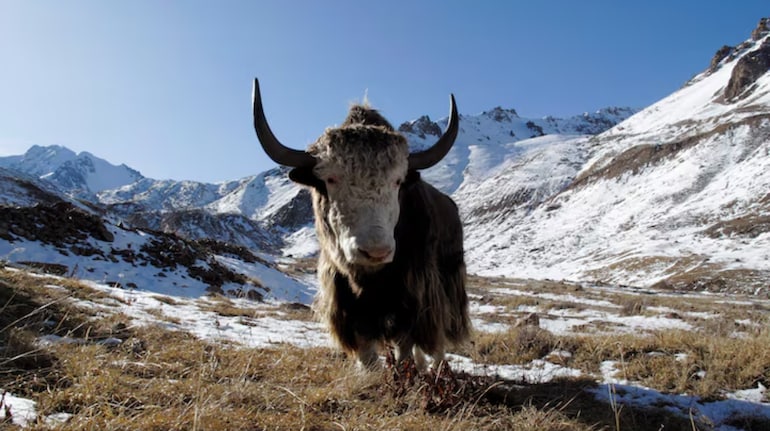
Ancient DNA extracted from tiny bone fragments has revealed a previously unknown large mammal that roamed Siberia alongside woolly mammoths and may have been hunted by the mysterious Denisovans. (Image Credit: Reuters)
A famous Siberian cave known for transforming our understanding of human evolution has yielded another extraordinary discovery: evidence of a previously unknown Ice Age mammal closely related to modern yaks.
The animal, nicknamed “Yak X,” lived in what is now southern Siberia, sharing its ancient landscape with woolly mammoths, woolly rhinoceroses and other enormous mammals. Although its bones are too fragmented to identify the animal by appearance alone, scientists have used ancient DNA to establish that it belonged to a distinct bovine species previously unknown to researchers.
The discovery was made through an analysis of bone fragments recovered from Denisova Cave in Russia’s Altai Mountains and other sites across the surrounding region. The findings, published in the scientific journal Current Biology, reveal a previously unrecognised branch of the bovine evolutionary family tree.
Researchers estimate that the lineage leading to Yak X separated from the ancestors of modern yaks approximately 400,000 years ago. The oldest remains examined date to around 250,000–200,000 years ago, while the youngest are approximately 27,000 years old.
The discovery provides new insights into the remarkable diversity of large mammals that inhabited Eurasia during the Ice Age and how ancient ecosystems changed over time.
Tiny Bones Reveal a Previously Unknown Species
Identifying an extinct animal from incomplete fossil remains can be extremely difficult. Bone fragments may lack the distinctive anatomical features scientists typically use to determine an animal's species.
That was the challenge facing researchers investigating Yak X.
The team analysed 20 bone fragments, including 14 recovered from Denisova Cave and six from other locations in the wider region. Although the fragments did not provide enough visible anatomical information to identify the animal, scientists were able to extract and analyse ancient DNA.
The resulting genetic data revealed that the remains belonged to a distinct bovine lineage rather than a known species of cattle, bison or yak.
The researchers generated 20 ancient genomes from the material, allowing them to compare the extinct animal's genetic history with that of other bovines.
Evolutionary geneticist Love Dalén of the Centre for Palaeogenetics in Sweden, the study's senior author, described identifying a large mammal from such small and unidentifiable fragments as unusual.
The breakthrough demonstrates how advances in ancient DNA analysis are transforming palaeontology. Genetic evidence can reveal relationships between extinct animals even when their physical remains are too incomplete to provide clear answers.
For now, however, the researchers are calling the animal Yak X rather than assigning it a formal scientific name. Genetic evidence is essential to the discovery, but additional evidence is needed to establish a formal taxonomic description.
What Did Yak X Look Like?
Although scientists cannot reconstruct the animal's precise appearance from the available fragments, its evolutionary relationship with modern yaks provides some clues.
Modern yaks are powerfully built bovines with thick coats, prominent horns and a characteristic hump around their shoulders. Wild yaks are now associated primarily with the high-altitude environments of the Tibetan Plateau.
Love Dalén suggested that Yak X probably resembled a modern yak more closely than a bison, given its evolutionary relationship with today's yaks.
However, this remains an informed inference rather than a confirmed reconstruction. The fragmented remains do not yet reveal exactly how large Yak X was, what its coat looked like or whether it possessed all the distinctive physical features of modern yaks.
The discovery nevertheless expands the known diversity of ancient bovines and shows that the evolutionary history of this group was more complex than the surviving species alone might suggest.
A World of Mammoths and Giant Predators
Yak X inhabited a vastly different landscape from the one found across Siberia today.
During the Ice Age, much of the region formed part of an extensive grassland ecosystem commonly known as the mammoth steppe. Despite the enormous ice sheets covering large portions of North America and Europe, much of Siberia remained free of those ice sheets and supported a diverse community of large mammals.
Yak X shared this environment with steppe bison and aurochs, the now-extinct wild ancestors of domestic cattle.
Woolly mammoths and woolly rhinoceroses also roamed the region, alongside horses and predators including cave hyenas and brown bears.
These animals were part of an interconnected ecosystem shaped by changing temperatures, vegetation and food availability. Large grazing mammals played important roles in these landscapes, while predators depended on the abundance of other animals for food.
The presence of Yak X adds another species to this already remarkable collection of Ice Age wildlife.
It also raises questions about how these animals competed for resources, responded to climatic changes and interacted with early human populations.
Did Denisovans Hunt Yak X?
Denisova Cave is internationally recognised for its connection to the Denisovans, an extinct group of ancient humans whose existence became known through discoveries made at the site.
In 2008, scientists recovered a finger bone from the cave that eventually provided the first evidence of this previously unknown human lineage. Subsequent genetic research revealed that Denisovans were close evolutionary relatives of Neanderthals and modern humans.
Evidence of Denisovan ancestry survives in some present-day human populations, particularly among people from Melanesia and Papua New Guinea.
The discovery of Yak X in the same cave raises the possibility that Denisovans encountered the animal and hunted it for food.
Researchers consider this plausible because Denisovans were hunter-gatherers who occupied a range of environments across Asia. The large bovine may have been among the animals available to them in the Altai region.
However, the available evidence does not establish that Denisovans definitely hunted Yak X. Confirming such an interaction would require more direct evidence, such as identifiable cut marks on bones or other archaeological traces linking the animal to human activity.
For now, the possibility offers an intriguing avenue for future research into the relationship between ancient humans and the wildlife around them.
Climate Change May Have Contributed to Its Disappearance
The genetic record also offers clues about the animal's long-term survival.
By examining specimens spanning roughly 200,000 years, researchers identified evidence suggesting that Yak X may have experienced a population decline during a period of warming approximately 120,000 years ago.
The youngest known specimen dates to around 27,000 years ago, indicating that the species survived into the later part of the Ice Age.
Its precise extinction date remains unknown, but researchers believe it disappeared sometime after the youngest specimen was deposited.
Changing environmental conditions may have played a role in its decline. Temperature fluctuations during the Pleistocene repeatedly altered habitats and the distribution of vegetation across Eurasia.
For large grazing mammals, such changes could affect access to food, the availability of suitable habitats and the ability of populations to remain connected.
Nevertheless, the evidence does not establish a single cause of Yak X's extinction. Further research would be needed to determine how much climate change, ecological competition and other factors contributed to its disappearance.
The species' history is another reminder that Ice Age ecosystems were dynamic environments in which animal populations could expand, decline and eventually vanish.